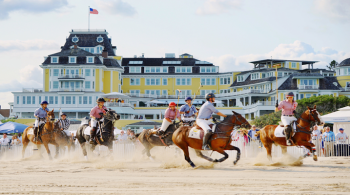

See Westerly’s 350-year history on foot through public art with the Bricks & Murals walking tour. Across downtown Westerly and neighboring Pawcatuck, CT you’ll see over a dozen hand painted murals. A partnership in 2017 between the Wall Dogs and local volunteers turned blank walls into historical landmarks. Take a walk and experience the history and vitality of downtown Westerly. This 1.5-mile walking tour leads through downtown shops, parks, and along the banks of the Pawcatuck River.
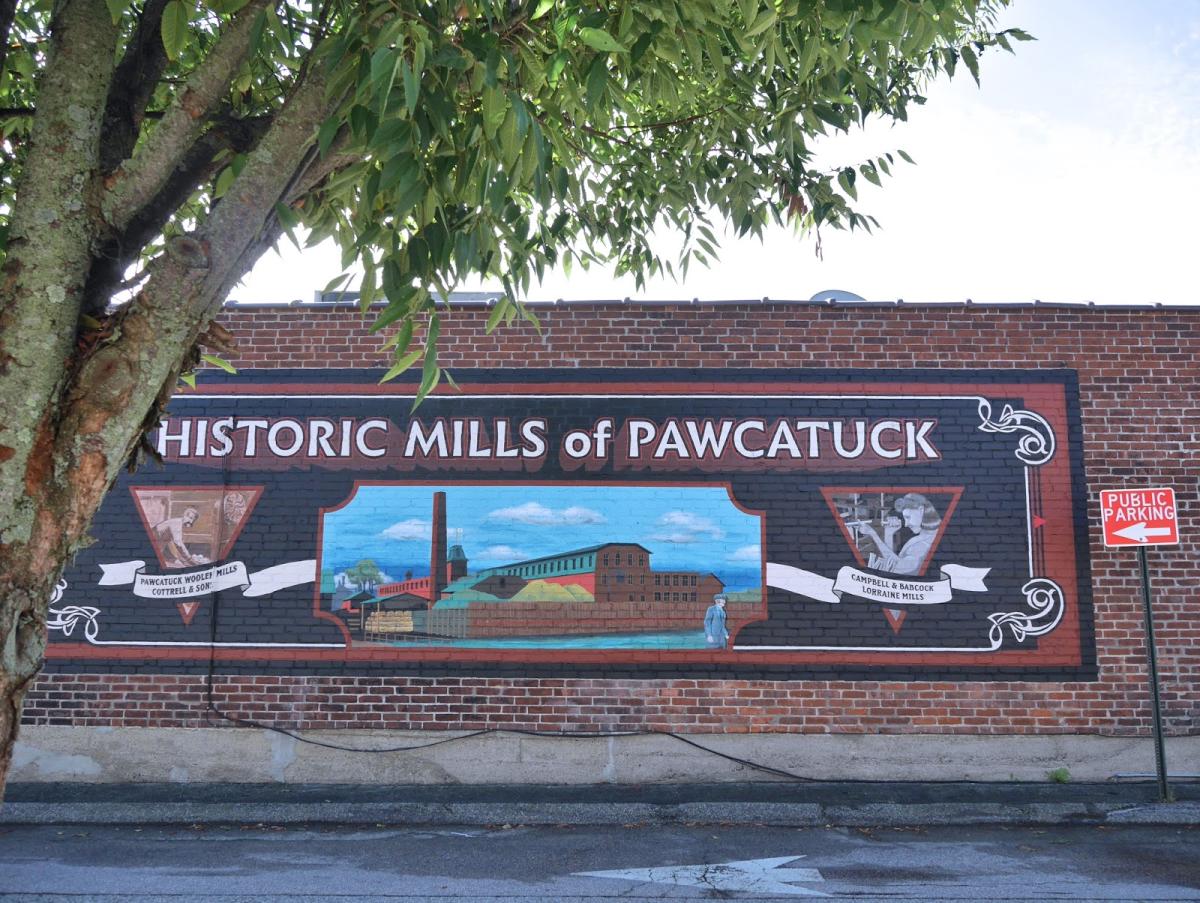
Mural #1: Industrial - Historic Mills of Pawcatuck
16 Mechanic Street, Pawcatuck, CT
This mural is on the side of the Pawcatuck Working Man’s Club, next to C.C. O’Brien’s on Mechanic Street. Rhode Island’s textile story began in 1790, when Samuel Slater introduced America’s first cotton-spinning machine in Pawtucket, RI. Westerly’s textile mills took off in the mid-1800s when O.M. Stillman built a mill village around his operations. Stillman ran the business until 1870, when it became the Westerly Woolen Company. Eventually the site was acquired by the G.C. Moore Company and continues today as Darlington Fabrics.
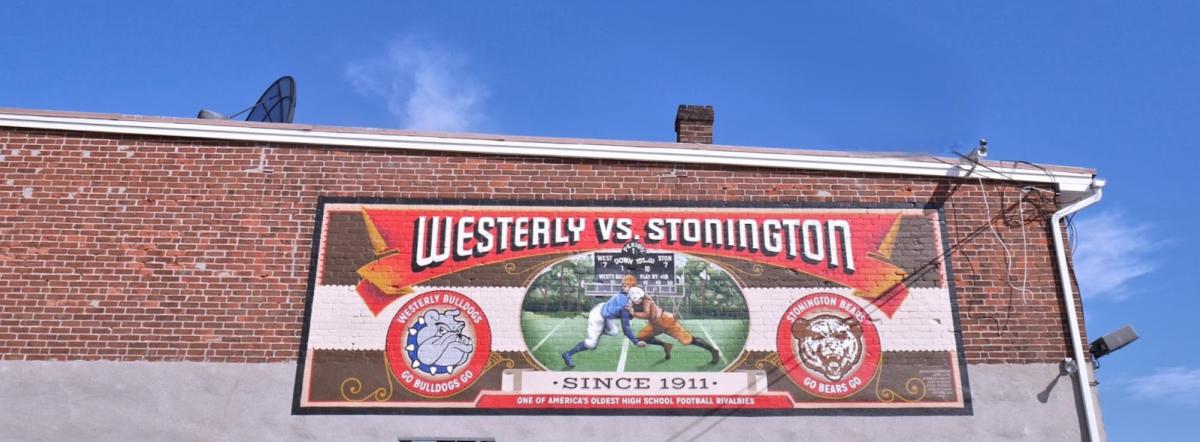
Mural #2: Westerly vs. Stonington
8 Mechanic Street, Pawcatuck, CT
Behind C.C. O’Brien’s, this mural spotlights the Thanksgiving football rivalry between the Westerly High Bulldogs and the Stonington High Bears. The teams have faced off every Thanksgiving morning since 1913 (the rivalry dates to 1911), making it the most-played series in the U.S.
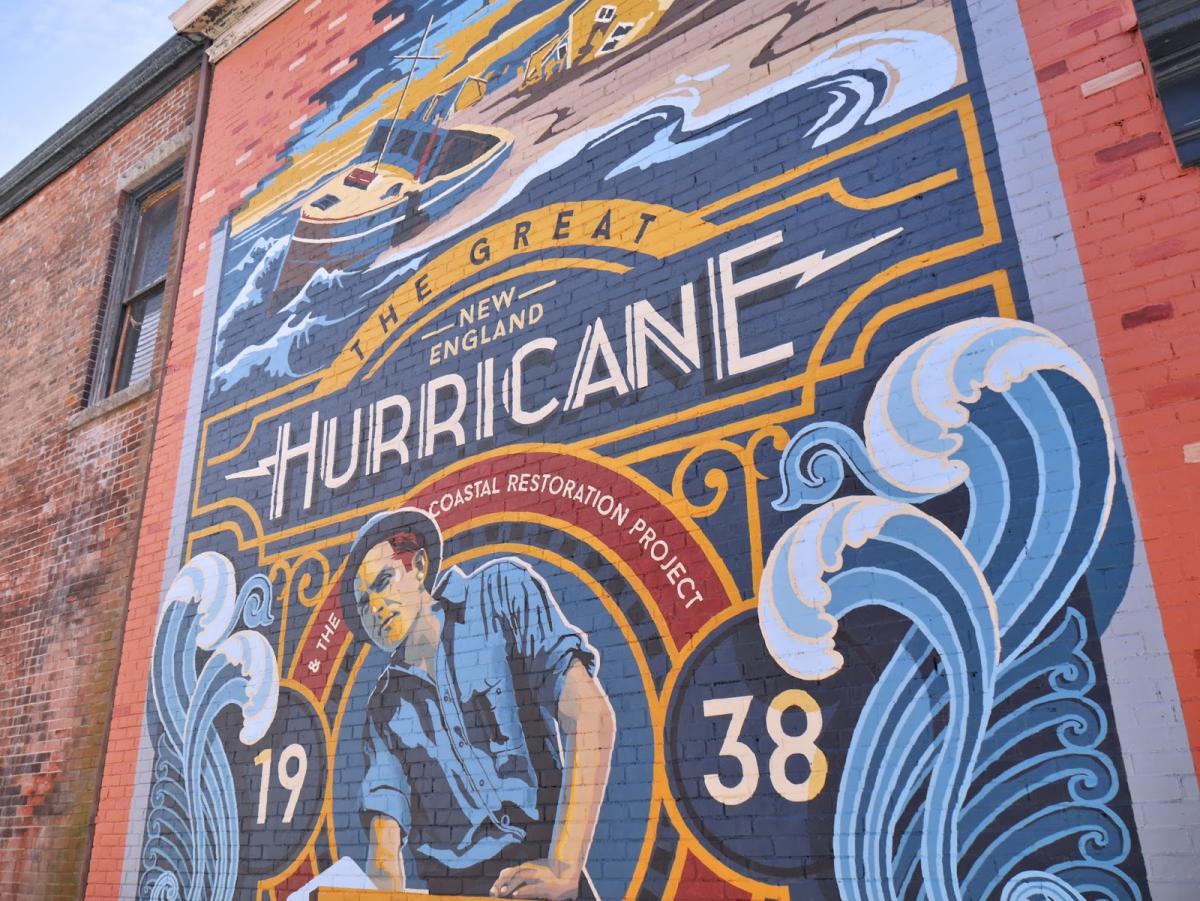
Mural #3: Westerly and the Great Hurricane of 1938
37 West Broad Street, Pawcatuck, CT
This mural next to Mel’s Downtown Creamery in Pawcatuck highlights the Great Hurricane of 1938. On September 21, 1938, fierce winds and storm surge unexpectedly hit Westerly. Damaging homes and businesses, flooding streets, and reshaping the shoreline, the community came together to rebuild anew.
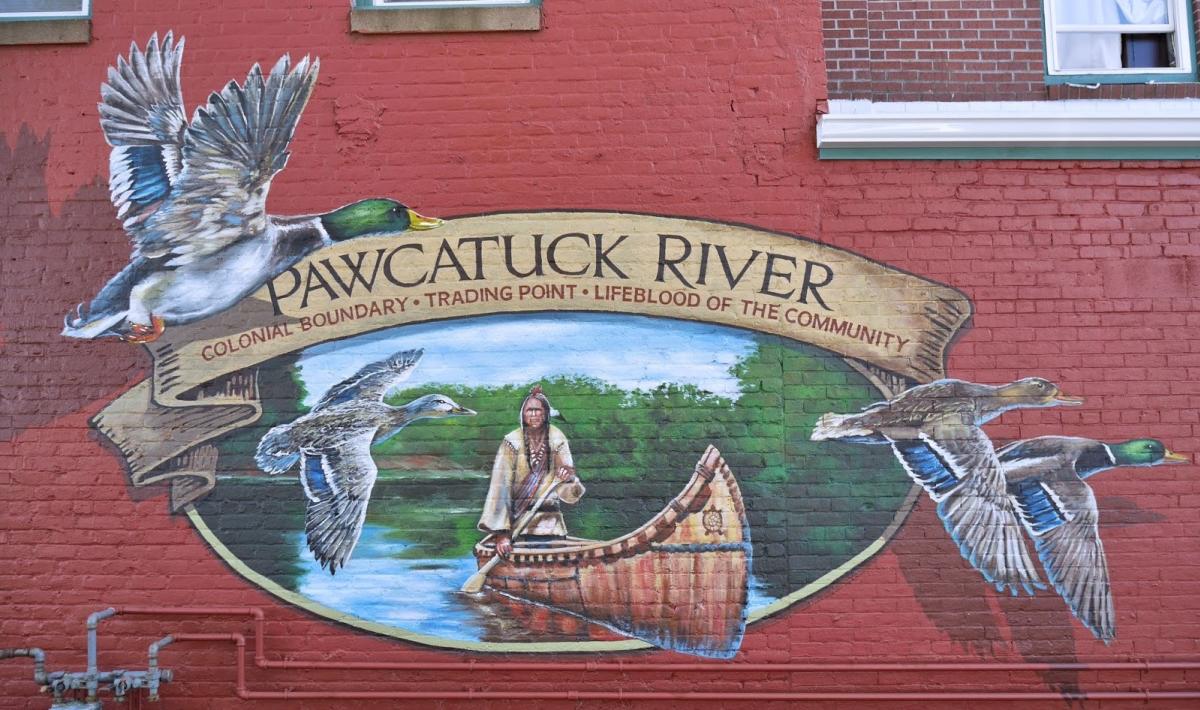
Mural #4: Pawcatuck River
38 West Broad Street, Pawcatuck, CT
Next to Jewett City Savings Bank in Pawcatuck, this mural highlights the Pawcatuck River’s role in a 17th-century border dispute between Rhode Island and Connecticut. A 1728 settlement made the river the official state line after years of legal fights between the two states.
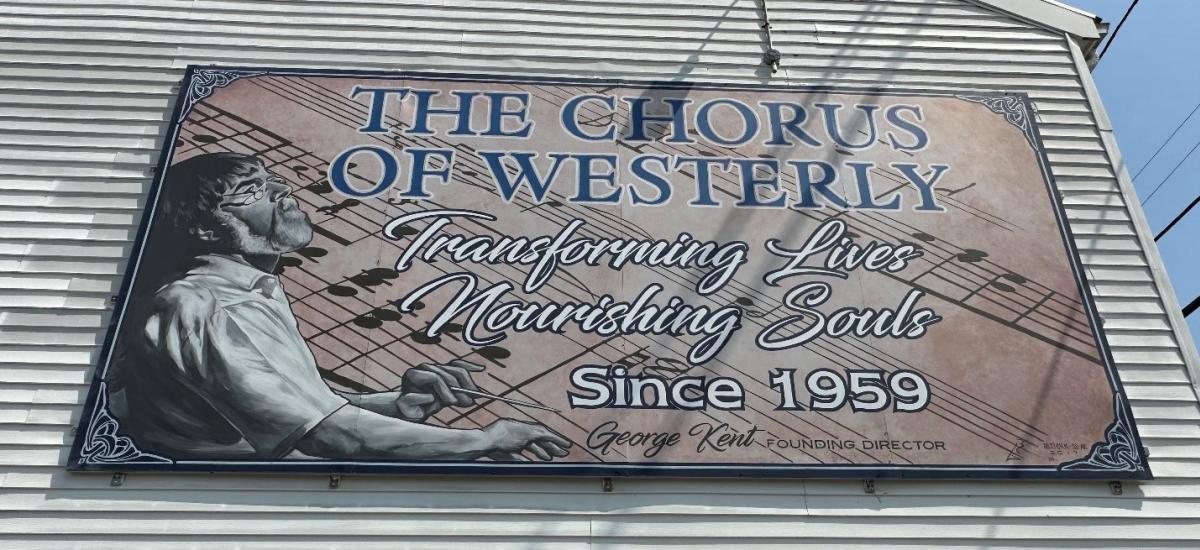
Mural #5: The Chorus of Westerly
137 Main Street, Westerly, RI
This mural is located on the back of Dick’s World of Wines. Founded in 1959 by George Kent, the Chorus of Westerly is a renowned Choral institution. Captivating audiences with its performances, the multi-generational Chorus consists of children from the age of 8 to adults of all ages. "A Celebration of Twelfth Night” and the “Summer Pops” in Wilcox Park have become annual attractions for visitors to experience. Today the Chorus of Westerly continues their legacy of artistic achievement with performances locally and abroad.
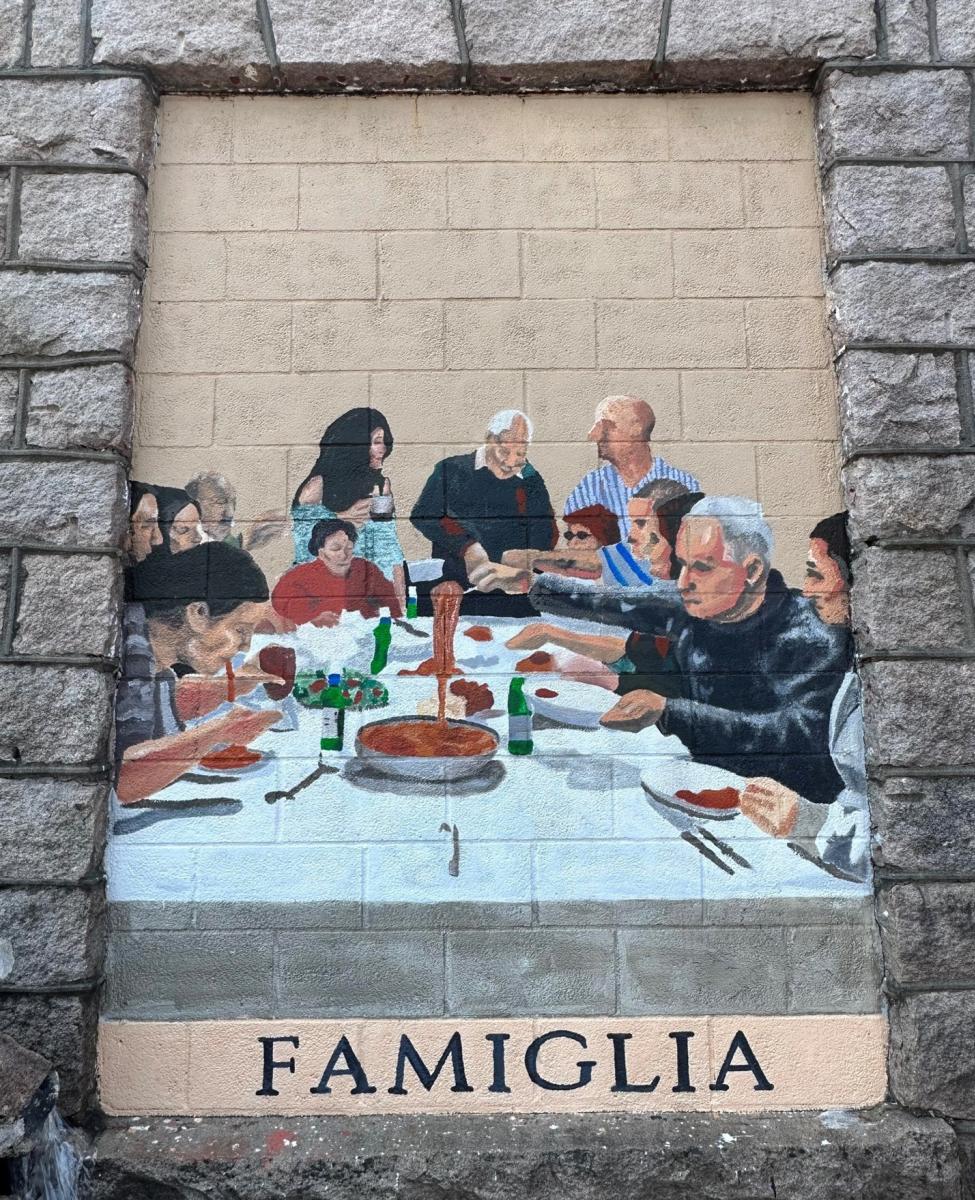
Mural #6: Italian Heritage
100 Main Street, Westerly, RI
Located on the side of Avie’s Ski Sports, this mural honors Westerly’s Italian heritage and the foods and traditions that influenced the town. Italian immigrants arrived in the U.S., and Westerly, in the late 1800s and early 1900s to work in the growing granite industry. At its center is the cultural importance of family—shared homes, recipes, and traditions passed down through generations.
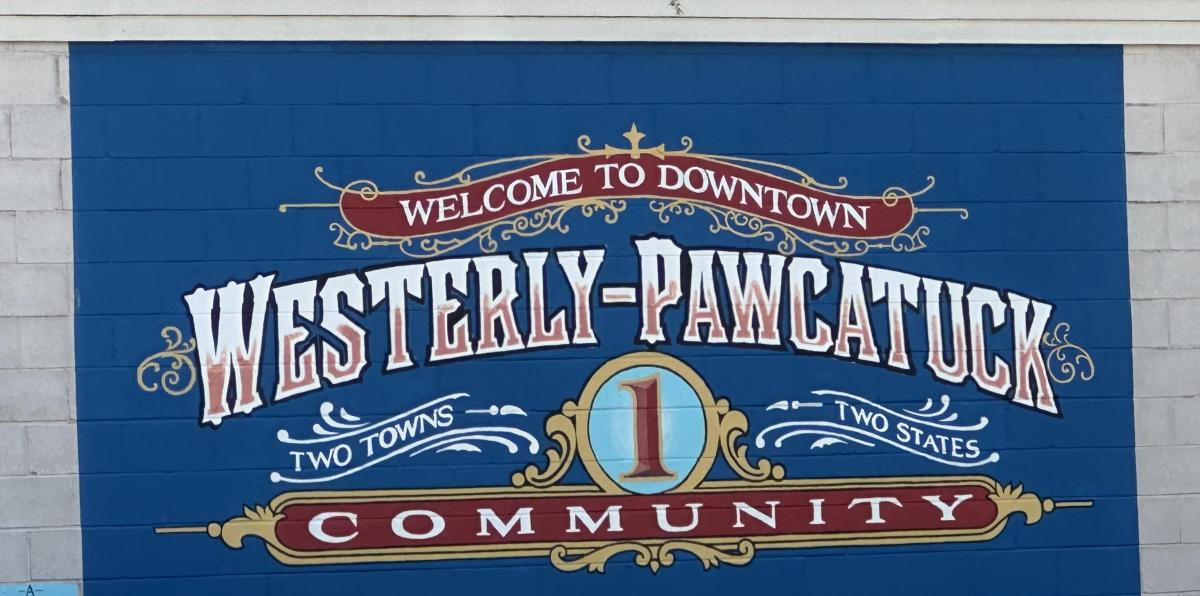
Mural #7: Welcome
87 Main Street, Westerly, RI
This mural is located next to the Washington Trust Skating Rink on the Pawcatuck River and celebrates Westerly, RI and Pawcatuck, CT as one harmonious community.
Mural #8: Children’s Mural
19 High Street, Westerly, RI (Rear Parking Lot)
Located at the entrance to Wilcox Park by the Westerly Post Office, this mural celebrates Westerly’s children as they creatively volunteered their time alongside professional artists to leave their mark on the town.
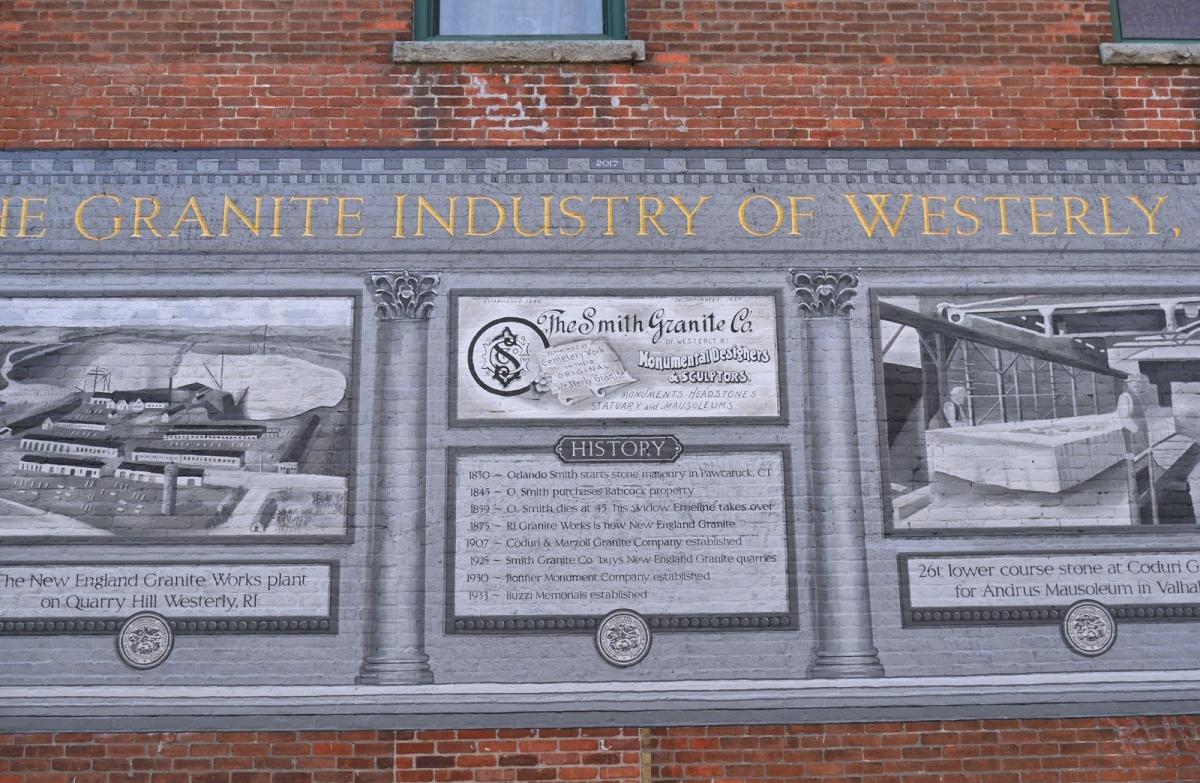
Mural #9: Granite Industry
39 High Street, Westerly, RI
Granite has shaped Westerly for nearly two centuries. Orlando Smith discovered a major deposit on the Babcock farm in 1846, and the Smith family developed some of the nation’s largest quarries. After the Civil War the industry boomed with monument commissions. The emergence of new companies and immigrants by 1892, led to more than half the town employed in the granite industry. Eventually many firms were sold to larger companies as business slowed in the early 1900s through the Great Depression. Quarrying continues today, and Westerly granite still shows up in monuments and buildings around town.
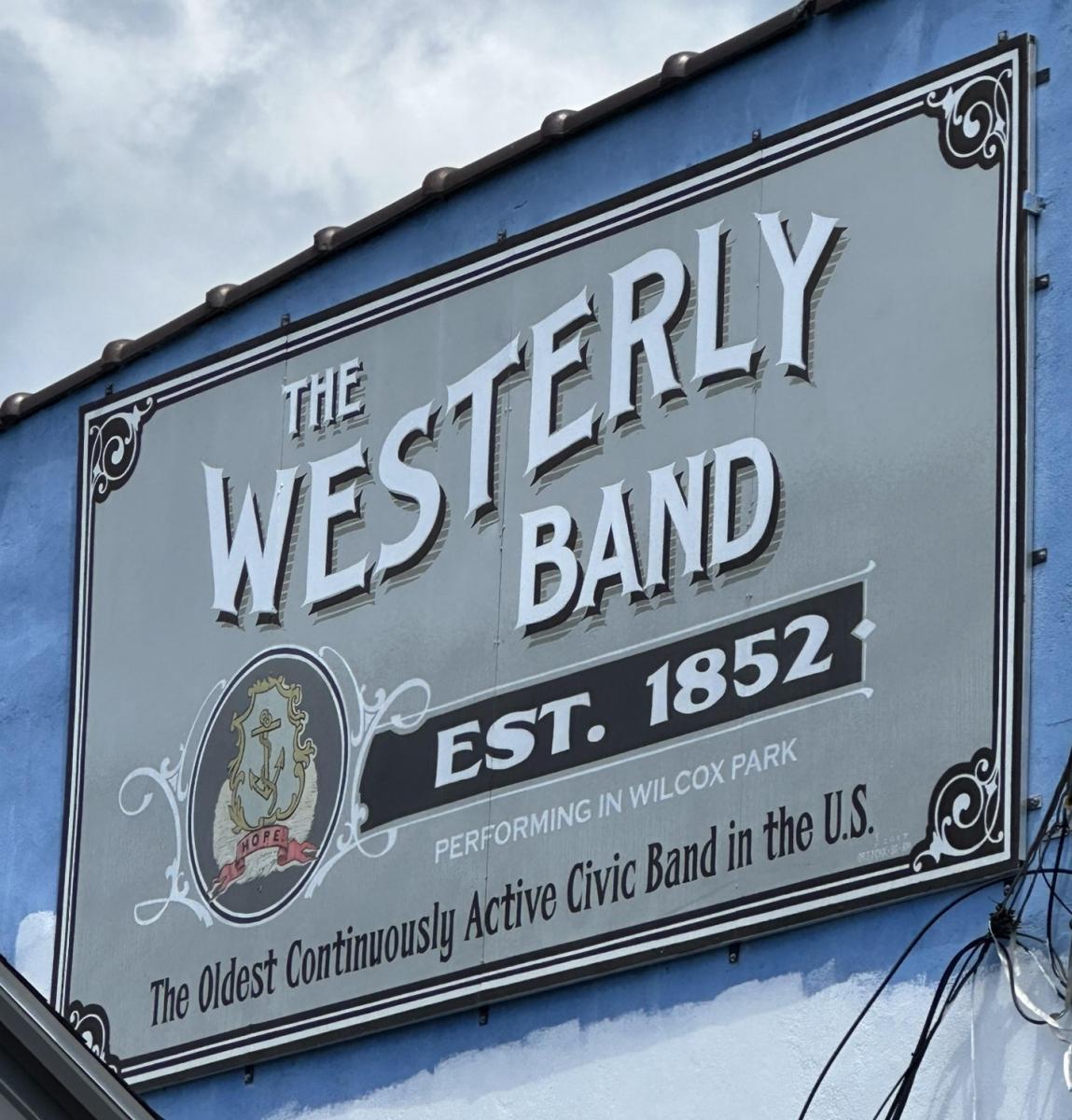
Mural #10: The Westerly Band
42 High Street, Westerly, RI
Located above Pooch’s Pour House, this mural celebrates the Westerly Band. Formed in the mid-1800s by local musicians, this community band of brass, woodwinds, and percussion, has kept the town’s musical tradition going for generations.
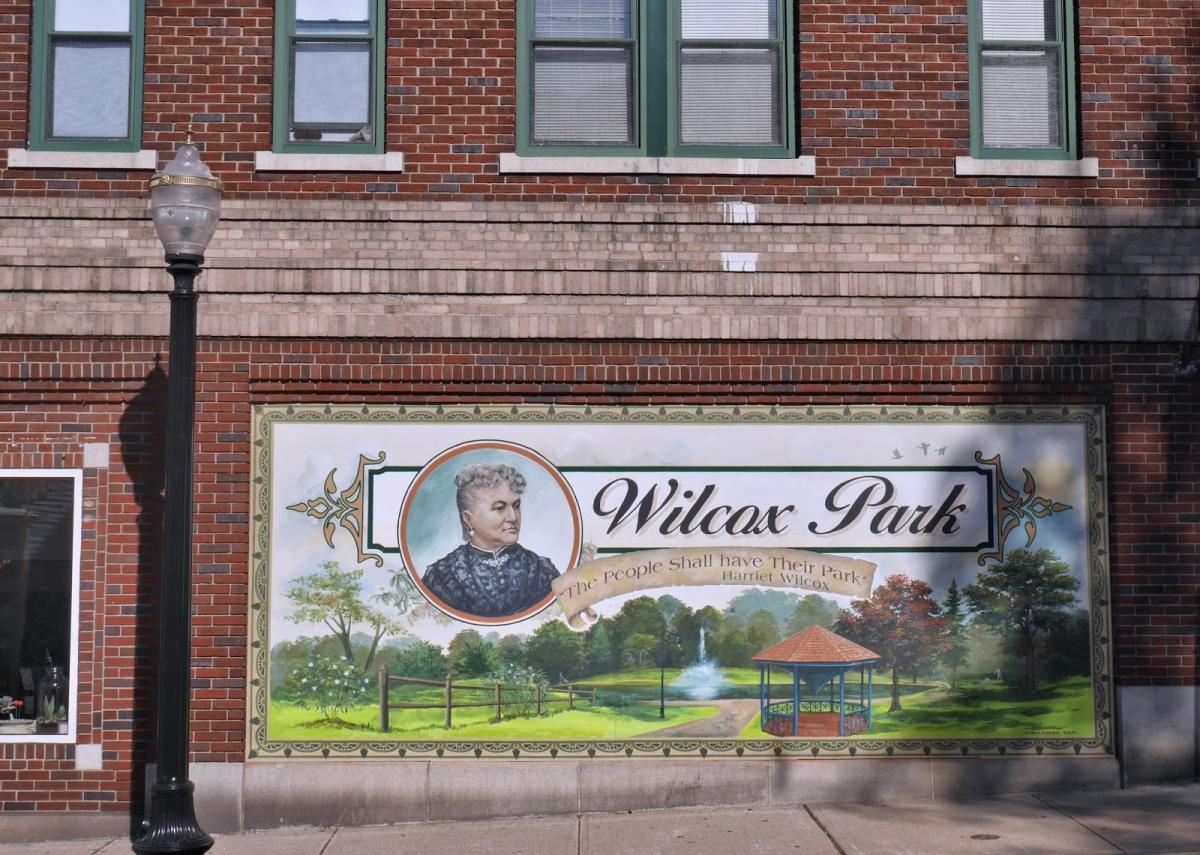
Mural #11: Wilcox Park
1 Canal Street, Westerly, RI
Located next to Christina’s LTD, this mural acknowledges a crown jewel of Westerly, Wilcox Park. A Victorian strolling park created in 1898 through a donation from the Wilcox family, it features winding paths, gardens, a pond, and an iconic gazebo. A favorite spot for concerts, community events, and scenic leisurely walks, Wilcox Park remains Westerly’s best-loved green space.
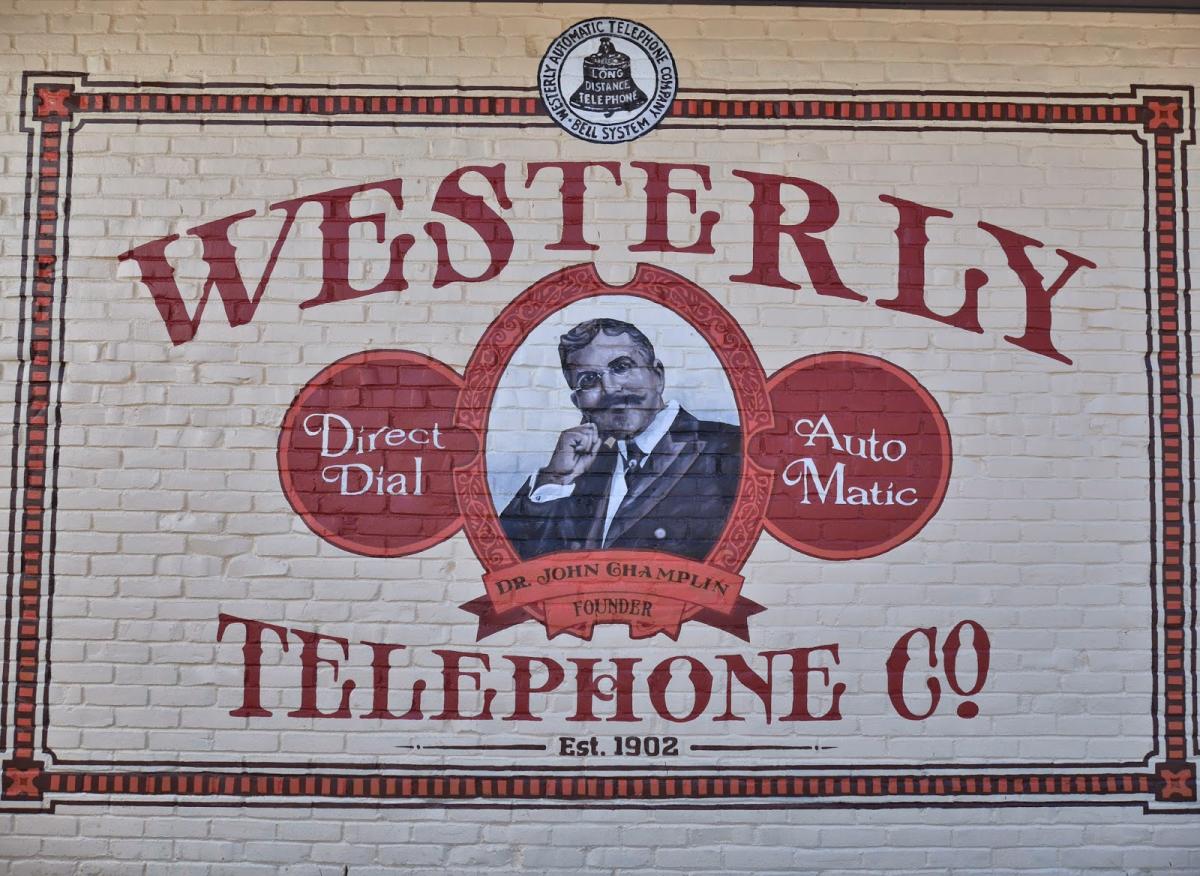
Mural #12: Westerly Telephone Company
15 Canal Street, Westerly, RI
Outside Surf Cantina, this mural honors Westerly’s beginnings with the automatic telephone. In 1902, Dr. John Champlin championed the idea of private calling and traveled to Chicago to learn about the system. He returned to launch the Westerly Automatic Telephone Company—promoted with the slogan “Prompt, Private, Perfect.” At one point Westerly was called “the most famous telephone town in the country”.
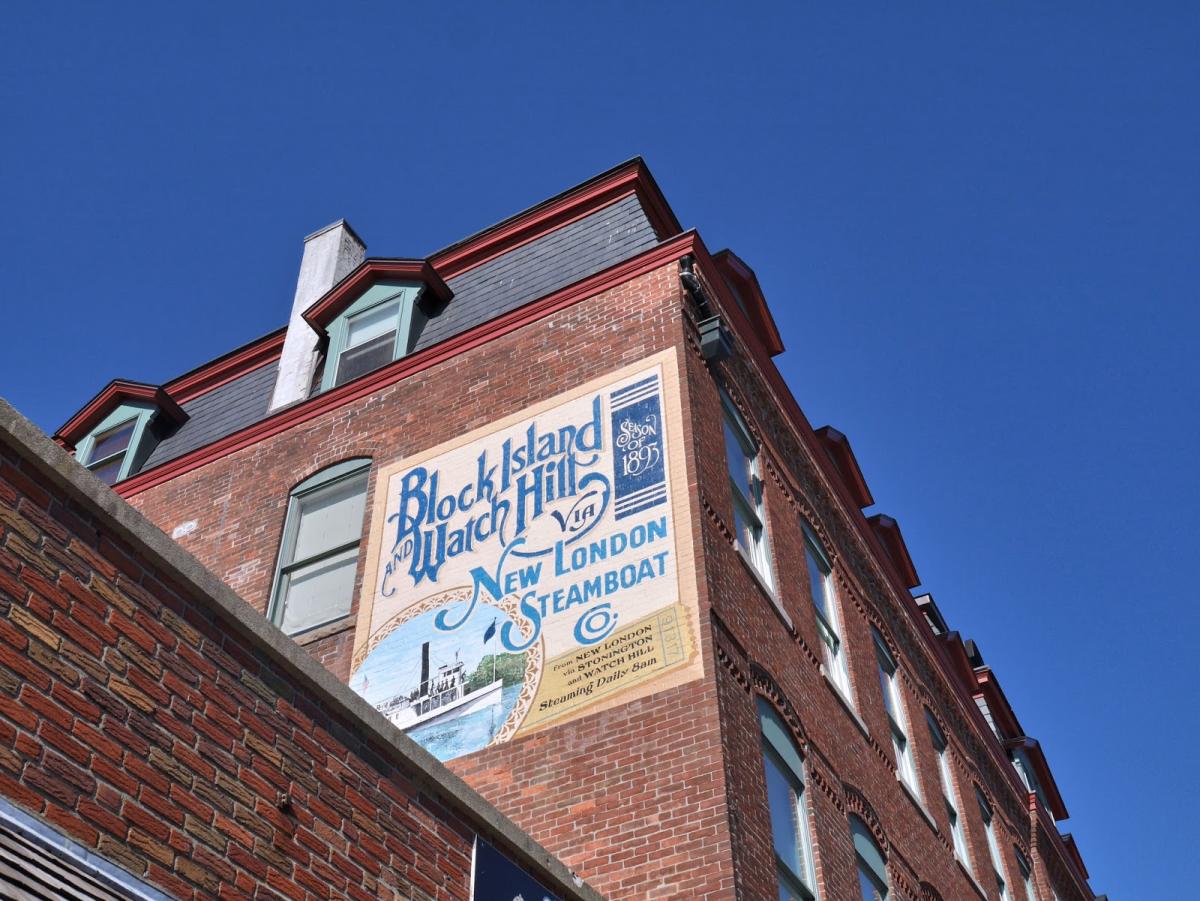
Mural #13: Ships & Ferries
10 Canal Street, Westerly, RI
In the early 20th century, the New London Steamboat and Shore Line Trolley became a much needed transportation source for coastal communities. Steamboats connected New London, Connecticut, to nearby islands and coastal towns, and trolleys brought people to the shoreline. Passengers boarded steamboats from New London's bustling harbor to vacation on the Westerly shoreline.
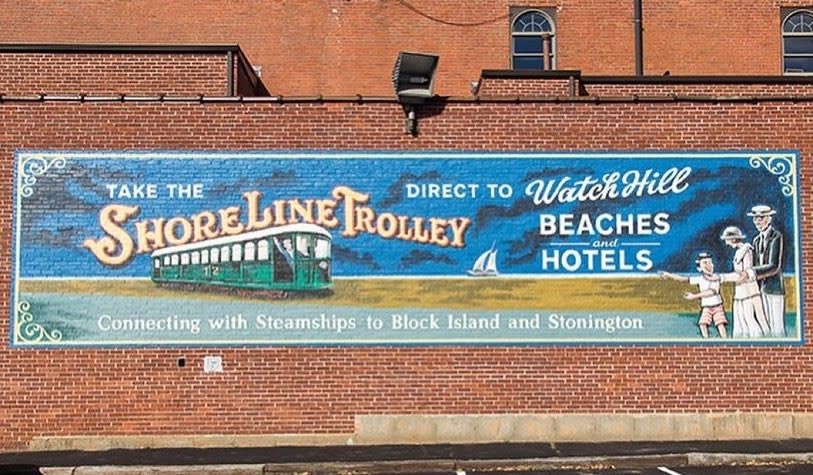
Mural #14: Beach Trolleys
21 Canal Street, Westerly, RI
The Shore Line Trolley mural shows the coastal tram that linked people from out of town to the beaches and attractions of Westerly during the summer season. Steamboat and trolley travel fueled the tourism growth that continues in South County today.
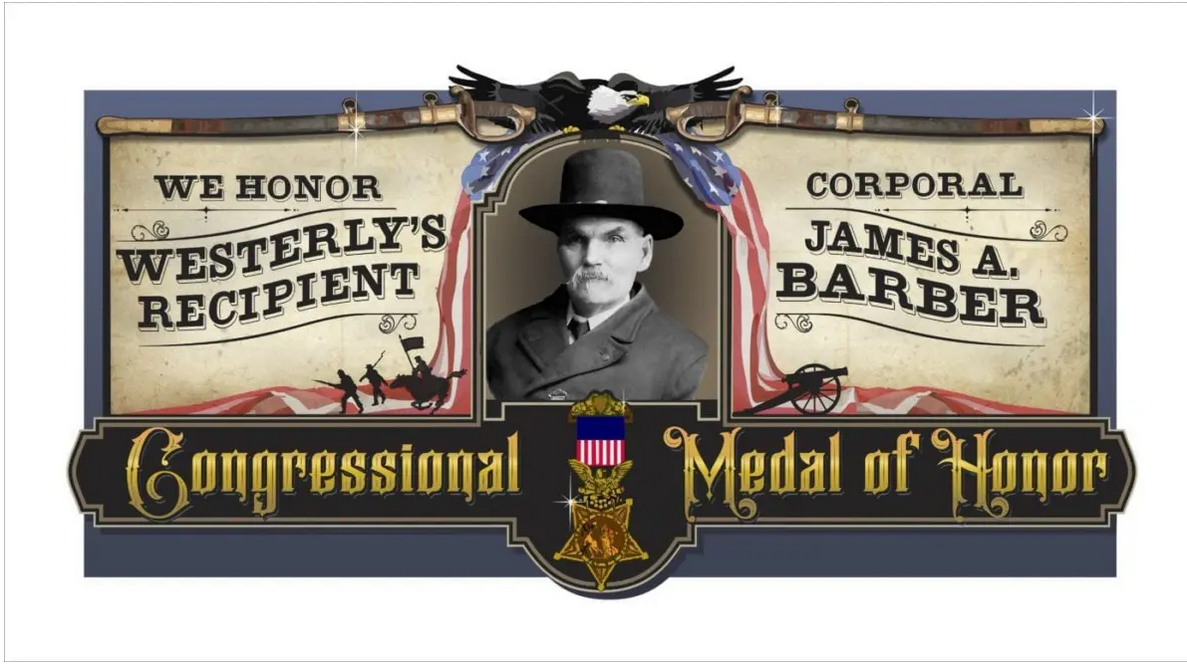
Mural #15: Civil War Veterans/Congressional Medal of Honor
29 Friendship Street, Westerly, RI
This mural honors Westerly’s Civil War veterans—and Medal of Honor recipient Corporal James Albert Barber. On April 2, 1865, Barber volunteered with 19 others from the 1st Rhode Island Light Artillery for an assault in Virginia, helping turn captured enemy guns back on their own forces. Wounded twice and discharged in 1865, Barber earned the nation’s highest military decoration. He died in Westerly in 1925 and is buried in River Bend Cemetery.
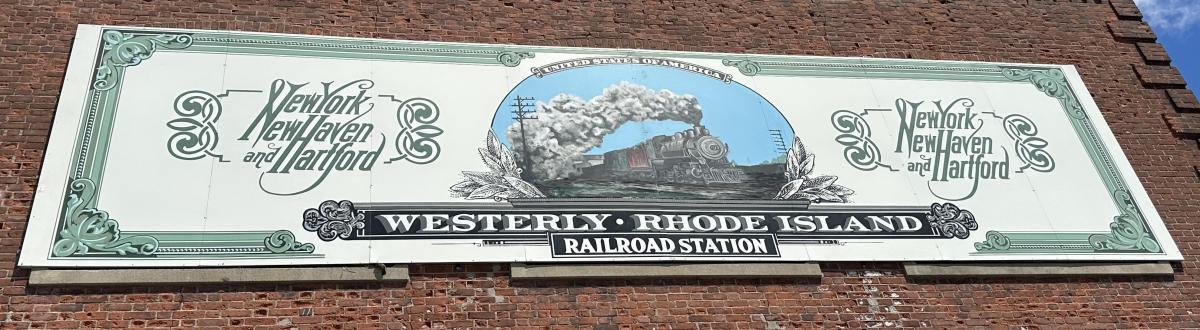
Mural #16: Railroad
29 Friendship Street, Westerly, RI
Next to Mural #15 on Friendship Street, this mural highlights Westerly’s rail travel and train station. Built in the late 1800s on the New York, New Haven and Hartford Railroad line, it was Westerly’s link to major cities. Moving passengers and freight it helped drive regional trade and growth. Today you will find the Artists Cooperative Gallery of Westerly within the historical building.
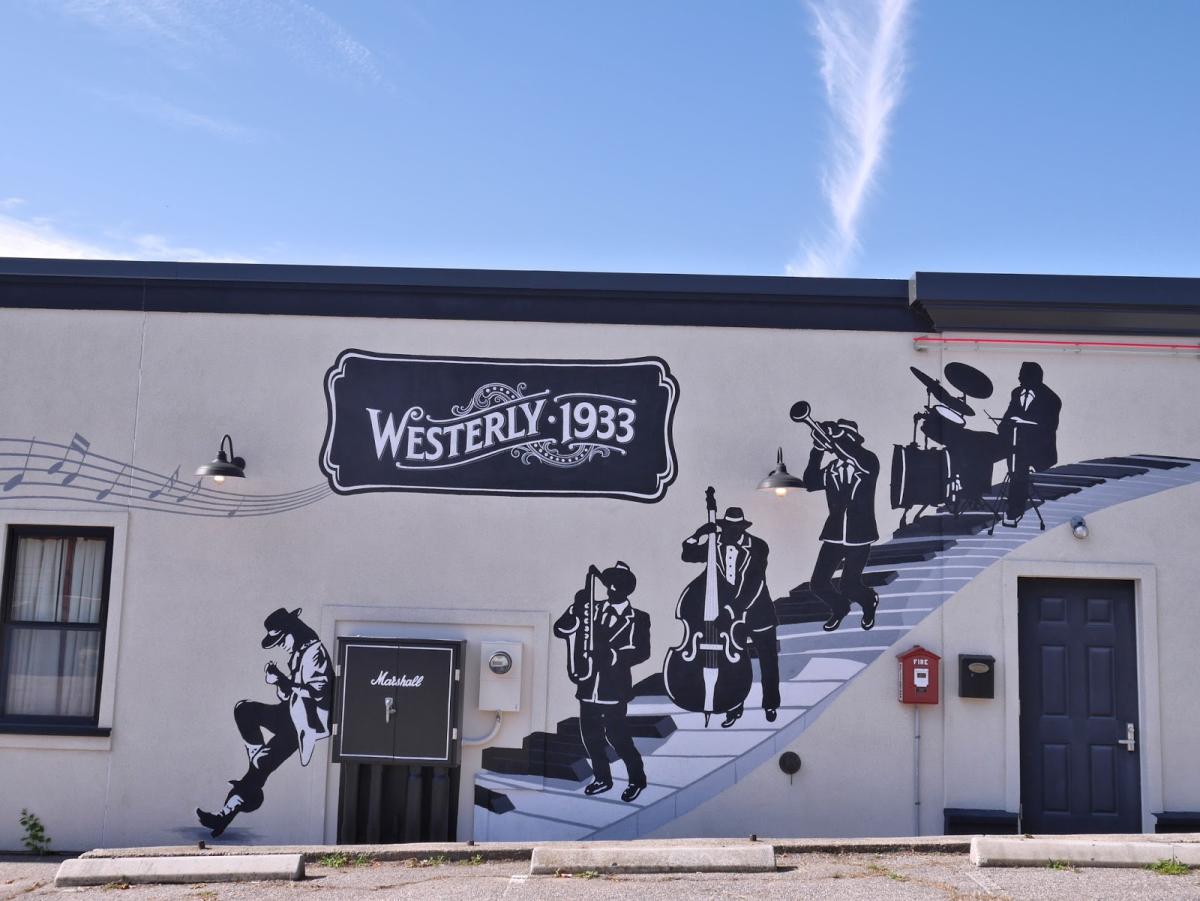
Mural #17: Blues
35 Railroad Avenue, Westerly, RI
This mural honors the Knickerbocker Music Center— “The Knick”—built shortly after Prohibition ended in 1933. Named after the Knickerbocker train, it grew into a popular entertainment spot in southern New England. Regular Knickerbocker performers, Roomful of Blues formed in Westerly in 1967 and has earned five Grammy nominations and seven Blues Music Awards with their Chicago blues, swing, and jump-blues sound. The Knick continues to foster the blues, country, and other music in Westerly.
By the time you reach the last wall, you’ve taken a 1.5- mile walk through time and seen some of what Westerly and Pawcatuck were built upon: industry, music, rivalry, storms, innovation, and the people who kept the community going. Enjoy the best of the present on your tour, Westerly’s restaurants, art, music, park benches, and unique small business. Snap a pic, tag and share your favorite stop, and keep the history alive.